
Product review
Fellow Opus Burr Grinder Review: 41 Settings, Small Footprint (2026)
We may earn a commission when you buy through links on this page, at no extra cost to you. Affiliate disclosure
The Fellow Opus suits home brewers with limited counter space who want 40 mm conical burrs and 41 settings for drip, pour-over and French press. Skip it if espresso is your main drink.
Who this helps: This review helps you decide whether the original Fellow Opus fits your counter and brew methods. It is desk research from published specifications and a first-look review, not a hands-on test.
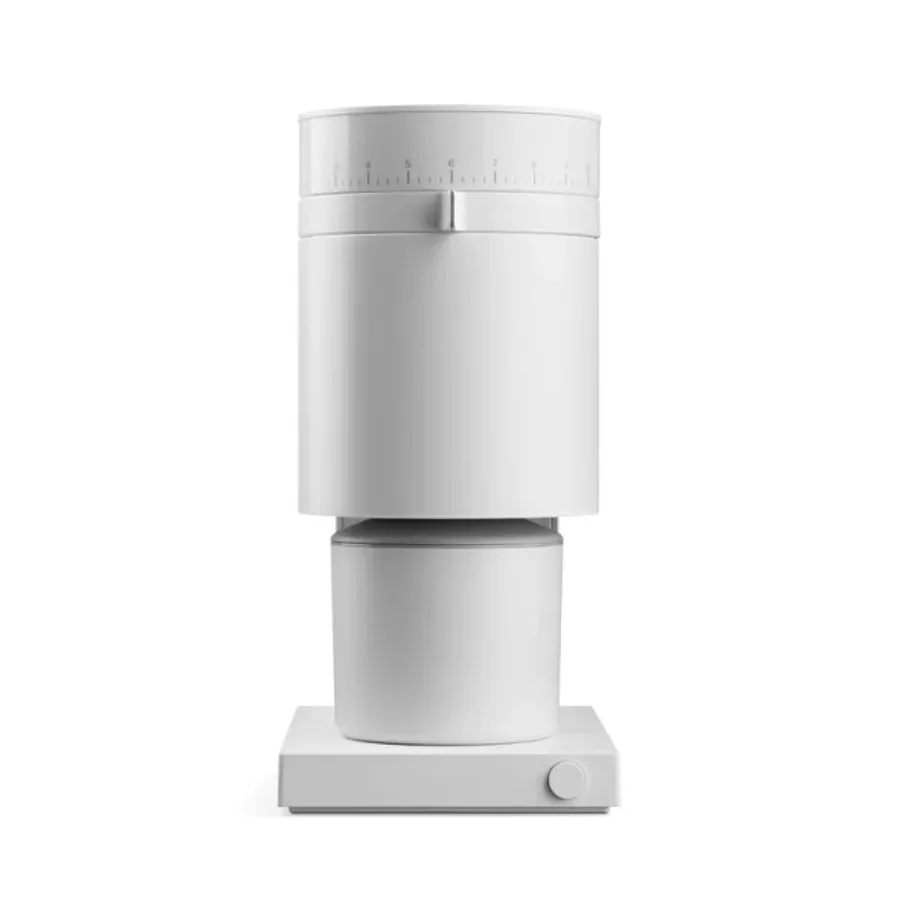
Product at a glance
Fellow Opus Conical Burr Grinder
A narrow all-purpose electric burr grinder for small kitchens that brew drip, pour-over and French press and want 41 settings in one machine.
Pros
- 40 mm conical burrs with 41 settings
- About 13 cm wide for tight counters
- Timed auto-stop from 30 to 120 seconds
Cons
- Not specialized for espresso
- Small 110 g hopper
- Burrs: 40 mm conical (C6-40)
- Grind settings: 41 settings
- Burr speed: 350 RPM
- Hopper capacity: About 110 g
- Dimensions: About 21 x 13 x 27 cm (D x W x H)
- Weight: About 2.35 kg empty
- Power: 120V, 140W (US model)
- Auto-stop: 30, 60, 90 or 120 seconds
Verdict: who the Fellow Opus is for
The Fellow Opus is a strong fit for small kitchens that brew drip, pour-over or French press and want one compact electric grinder with a wide range of settings. Published specifications list 40 mm conical burrs, 41 grind settings and a bean hopper of about 110 g.
The narrow body, about 13 cm wide, is the reason it suits tight counters. It sits beside a kettle or brewer without taking over the workspace.
Espresso-focused readers should look at grinders built mainly for espresso. The Opus covers a broad range, but espresso needs very fine, repeatable adjustments that dedicated espresso grinders handle better.
Verified specifications
The original Opus uses 40 mm C6-40 conical burrs at 350 RPM, with 41 settings and a timed auto-stop. Figures below come from a first-look review and retailer specifications, since we did not confirm them on Fellow's own page.
| Attribute | Fellow Opus |
|---|---|
| Burrs | 40 mm conical (C6-40) |
| Grind settings | 41 |
| Burr speed | 350 RPM |
| Hopper capacity | About 110 g |
| Dimensions | About 21 x 13 x 27 cm (D x W x H) |
| Weight | About 2.35 kg empty |
| Power | 120V, 140W (US model) |
| Auto-stop | 30, 60, 90 or 120 seconds |
Fellow also sells the Opus 2 and an Opus Gen 2, which use different burrs and adjustment. Confirm the model name on the box so these specifications match what you buy.
Counter and cabinet fit
At about 27 cm tall, the Opus fits under most standard upper cabinets, but measure first because the hopper lid needs room to open. Its 13 cm width is the main space saver.
Our guide on how to measure grinder clearance under kitchen cabinets walks through measuring the gap and adding space for filling the hopper. Do that check before ordering if the grinder will live under a cabinet.
Leave room in front for the grounds catcher. Pulling the catcher straight out is easier than lifting the whole grinder each morning.
Brew methods and grind range

Forty-one settings cover coarse French press through drip and pour-over, with espresso at the fine end as a secondary use. The burr grinder below illustrates how burrs crush beans to a set size.
| Brew method | Fit with the Opus |
|---|---|
| French press and cold brew | Good: coarse settings |
| Drip machine | Good: medium settings |
| Pour-over | Good: medium-fine settings |
| Moka pot | Workable: fine settings |
| Espresso | Limited: consider a dedicated espresso grinder |
Start in the middle of the range for drip, then move a few settings at a time. Small changes are easier to judge by taste than large jumps.
Strengths and limitations
Strengths are the narrow footprint, the wide setting range and the timed auto-stop; limits are espresso precision and the small 110 g hopper.
- Strengths: 40 mm conical burrs, 41 settings, a 13 cm wide body and a 30 to 120 second auto-stop.
- Limitations: espresso is not its strength, and the hopper holds about 110 g, so it suits single-dose or small-batch use.
- Unknown from the sources we checked: grind retention figures and noise levels, which vary by measurement method.
The 120V, 140W specification applies to the US model. Readers outside North America should confirm the voltage version sold in their country.
Alternatives to consider
Look at other grinder types when espresso comes first, when you want no cord at all, or when you grind large batches. Each case changes the kind of grinder that fits best.
- Espresso first: a grinder designed for espresso offers finer, stepless or micro-step adjustment for dialing in shots.
- No counter space or no outlet: a manual burr grinder stores in a drawer and works anywhere, at the cost of hand effort each morning.
- Large batches: if you brew a full carafe for a household, a grinder with a larger hopper avoids refilling.
- Newer Fellow models: the Opus 2 uses different burrs and adjustment, so compare its published specifications if you want Fellow's newer design.
Compare options on burr size, number or type of adjustment steps, footprint and outlet voltage, the same criteria this review uses.
Before you buy: checklist
Run these checks before choosing the Fellow Opus.
- Your main brew methods are drip, pour-over, French press or cold brew.
- You measured the space under your cabinets, including room to open the lid.
- The model is the original Opus, not the Opus 2 or Gen 2, if you rely on these specs.
- The voltage matches your country's outlets.
- A 110 g hopper suits how much coffee you grind at once.
FAQ
How many grind settings does the Fellow Opus have?
The original Fellow Opus has 41 grind settings using 40 mm conical burrs, according to published specifications. That range covers coarse French press through drip and pour-over, with fine settings for moka pot and occasional espresso.
Is the Fellow Opus good for espresso?
It can reach fine settings, but it is designed as an all-purpose grinder. Espresso needs very fine, repeatable adjustments, so readers who mainly drink espresso usually do better with a grinder built for espresso first.
Will the Fellow Opus fit under my kitchen cabinets?
It stands about 27 cm tall, which clears many standard cabinets. Measure the gap under your cabinets and leave extra room for opening the hopper lid and pouring in beans before you decide where it will live.
How much coffee does the Opus hopper hold?
Published specifications give a hopper capacity of about 110 g. That suits grinding for a few cups at a time or single-dose use. It is not meant to store a full bag of beans.
What is the difference between the Opus and the Opus 2?
Fellow's newer Opus 2 uses different burrs and adjustment from the original model, so the specifications in this review apply only to the original Opus. Check the exact model name on the box or listing before you buy.
Sources
- CoffeeGeek: Fellow Opus conical burr grinder first look — checked 2026-11-20
Ready to decide?
Check the current listing for the Fellow Opus Conical Burr Grinder on Amazon.
View on Amazon